Bad theology is like bad breath
![]()
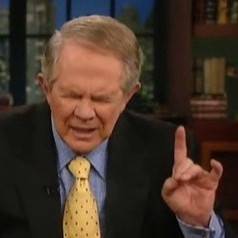
I thought at first that I was the only one who could smell it. But the stench of hypocrisy and bad theology of conservative, fundamentalist Christianity is something almost everyone these days can smell, as illustrated last week by the almost universal outrage against Pat Robertson's comments about Haiti. So I'm not going to use up my column space or hold my nose over that particular emanation from Robertson's foul mouth.
But that odor is just one of many that has been knocking people out in recent history.
In 2005, various conservative religious zealots claimed Hurricane Katrina was God's punishment for New Orleans' sinful, wicked ways. For example Dwight McKissic, a Baptist pastor from Texas said, "New Orleans flaunts sin in a way that no other places do. They call it the Big Easy. There are ten abortion clinics in Louisiana; five of those are in New Orleans. They have a Southern Decadence parade every year and they call it gay pride. When you study Scripture, it's not out of the boundaries of God to punish a nation for sin and because of sin."
In 2004, after the Indian Ocean tsunami devastated large areas inhabited mostly by Hindus, Muslims and Buddhists, Henry Blackaby, a Southern Baptist pastor and author, claimed the tsunami was God's punishment for the persecution of Christians in that area. He said, "If you read the Old Testament, especially, God is very concerned how the nations treat His covenant people. The nations that persecuted, offended and killed His people, God came down and destroyed them. And He's the same God today. He's just as concerned about His people."
In 2001, after the terrorist attacks of September 11, the conservative religious nuts claimed the attacks were God's punishment for a variety of things. For example, James Dobson said, "Yes I believe that the attacks are God's punishment because we are in a moral decay in this country, with abortion, forcing children to be taught about homosexuality, removing God from the schools, sexual immorality on television, and in our government. And this is God's way of punishing the wicked."
This list could go on for several pages because every time there's been a disaster somewhere, some conservative religious demagogue has said that it is God's punishment for something that somebody has done. In seminary, I learned a big fancy name for it, "retribution theology," but I think I prefer simply to call it "insanity."
It is bad theology — very bad, to be precise. As the pastor whom I heard in church on Sunday said of Pat Robertson's comments, "He has hate in his heart and bad theology on his breath."
Yes, I agree. Retribution theology stinks — like halitosis.
But this theological halitosis cannot be gotten rid of with a simple spiritual teeth brushing because it is caused by some kind of deeper spiritual disease or infection. Its root appears to be selfishness and arrogance which leads to disrespect and disregard of others; it's disrespect and disregard initially for their rights and ultimately for their lives.
The folks who believe in retribution theology often have four components to their ideology: 1) God punishes bad people 2) Satan punishes good people, 3) God rewards good people, and 4) Satan rewards bad people. And, of course, the believers in retribution theology always believe that they are good and that other people are bad so that they can selfishly interpret any event according to the sentences below:
- If something bad happens to you, God is punishing you because you are bad.
- If something bad happens to me, Satan is punishing me because I am good.
- If something good happens to me, God is rewarding me because I am good.
- If something good happens to you, Satan is rewarding you because you are bad.
This is just rotten, malodorous, theological halitosis; and every time some religious fundamentalist opens their big mouth and says something like Pat Robertson did last week, the stench makes me vomit a little in my mouth.
But at least I can brush my teeth to get rid of the taste.
The fundamentalists, on the other hand, require a more invasive procedure to extract their bad theology. It is not an easy or painless operation because bad theology, along with hate and fear, is often fed to them from a very young age so that, by the time they are adults, it has spread throughout their entire system not unlike a cancer. People who are afflicted with bad theology might require years of re-education and exposure to people of many different religions, races and nationalities; but even then, they might not be cured. Sometimes they even get worse.
I really wish there were something simple such as a pill that people could swallow to rid them of their bad theology. But, unfortunately, we will probably find a cure for the common cold before we learn how to cure ignorance.
It really stinks.
20 comments
These kind of statement many fundamentalist have given over the centuries are, I would say, examples of Jeremiads. A Jeremiad was usually written in long text. Not just statements like today. They were basically writings condemning modern society’s lack of morality and claiming current problems as Gods punishment.
In 1962, before renouncing his black supremacist views, Malcolm X was quoted at a Nation of Islam meeting saying a recent plane crash in Paris, where all the passengers were white. Was Allah’s way of bring justice for the killing of Ronald Stokes who was shoot to death by Los Angeles police officers.
-Jp
Oh my gawd...
and atheism is like a broken nail. But seriously thanks. Its obvious this is the problem with our society. Christian conservatives that likely voted for Bush right? At least we’re righteous enough, or intelligent enough, to see it. At least we see these idiots for what they are. Them. Those idiots. Christians, right there.
I have read and re-read this article and can’t see where the author mentioned voting, past presidents, or dispensing with religion altogether—only unfortunate people who use others’ misfortunes to further agendas of hatred and discrimination.
This problem goes beyond mere theology of these religious adherents, but the religion itself. There’s frankly no way to interpret the Bible as not advocating what you call “retribution theology.“ The stories and lessons are there, plain as day. Fortunately many people who claim to be of this faith that are rarely adherents of the actual religion, as opposed to using it as a label for their more generic faith in some higher power. Those who actually stick to the doctrine recognize that that such moderates aren’t true adherents, regardless of whether it gets them off the hook for much of the unpopular scripture in modern times.
Long story short: It’s not they’re getting the religion wrong and being atrocious and unacceptable in modern society… it’s that they’re actually adhering to a religion that is atrocious and unacceptable in modern society.
From an excellent post from another local blogger on the subject:
All the people condemning Roberton seem to be of the mindset that God couldn’t have been behind an even that has caused such suffering. Which makes me wonder: have these people even <span style=“font-style: italic;“>read</span> the Bible? God sent a plague upon Egypt that killed the first born male child of every family in Egypt—including the cattle—so that Moses could lead the Jews out of Egypt into the wilderness. The number of people killed in the Haitian earthquake is probably a drop in the bucket compared to the number that died when God drowned every living person on Earth except for Noah’s family. Turning to the New Testament, I’d like to point out that the Four Horsemen of the Apocalypse, foretold in Revelation, are not named Kittens, Puppies, Flowers, and Candy. God is more than happy to slaughter people by the bucketload when it suits His mysterious ways.
The full post is worth the read if you get a chance.
“Long story short: It’s not they’re getting the religion wrong and being atrocious and unacceptable in modern society… it’s that they’re actually adhering to a religion that is atrocious and unacceptable in modern society.“
Exactly. Instead of trying to wrap the Bible around modern, enlightened thought (for lack of a better term), it makes a lot more sense to discard the Bible for the outdated document it actually is. When extremists like Robertson say these kind of horrible things, their more liberal Christian critics say, “Well they just don’t get the true meaning of the scriptures.“ That’s not the case. The problem is, they often do.
I’m simplfying here, because there’s plenty of beautiful, relevant and still useful stuff in the Bible. However, sometimes when people like Robertson and Bin Laden do extreme things, it’s not always because they got their religion wrong. It’s sometimes because they got it right. They’re just working off blueprints written during times when the dominant mentalities were a lot more violent and a lot less tolerant.
The question to me isn’t so much whether Robertson is a good Christian, but whether it’s good to be a Christian in the first place.
But when you say “the religion itself” it makes Christianity sound like one unified religion with one body of believers who all hold to the same doctrine. But it’s not. Christianity is a very splintered, fragmented religion made up of diverse people who believe very different things. I don’t think there even exists anymore what C.S. Lewis calls “Mere Christianity”—a set of basic beliefs that all denominations and churches hold in common. So while I agree that there are some factions of Christianity whose beliefs are “atrocious and unacceptable in modern society,“ I don’t think it’s fair to paint all of Christianity with that brush.
And, yes, it is true that much of the Hebrew Bible (the Christian Old Testament) has themes of retribution theology. The Hebrew God YHWH is often a jealous and vengeful God who punishes people for not obeying the commandments. But this was the way ancient people tried to understand the world around them. When events happened, such as earthquakes, that they did not understand, they blamed it on the Gods and assumed that humans must have done something to offend the deities.
But religion evolves and grows up over time. With Jesus, we find a more “grown up” version of religion. Instead of “an eye for an eye” we get “do not repay evil with evil.“ The essence of Jesus’ teachings are love, compassion, forgiveness, patients and helping others. Not that those aren’t present in the Hebrew Bible as well—after all Jesus was a Jew and his basic message of love God and love your neighbor comes directly from the Hebrew scriptures. But with Jesus these ideas are more focused and defined and his understanding of God is that of a loving, caring, forgiving deity—not one who smites people at whim.
Religions grow and evolve just as people do, but, like any organism, there are mutations that develop during the course of evolution that do not work out so well, while there are others that do work. Then there are still others that don’t change at all. I think the process of religious evolution will, over time, weed out the versions of Christianity that aren’t beneficial to humanity. And the versions that don’t change will simply become extinct.
But does that mean we have to throw out completely the old stuff that doesn’t work? To some degree yes—we don’t continue to believe in magic or in God’s that cause natural disasters. But we also hold onto the ancient stuff to remember, to see where we’ve come from and to learn from our past mistakes.
Most of us do not behave the same way we we did when we were two years old, throwing temper tantrums and such. But we still keep the photos and videos and mementos from our past. I view religion much the same way. It has evolved and it is still evolving. The conservative fundamentalists—of all religions, not just Christianity—are the folks who do not allow their faith to grow up and change for the better. For them it is a fixed, unchanging, absolute set of doctrines and they reject anything and anyone that disagrees with them. It’s like they have kept the old photos of when they were two and say, “this is how I’m always going to behave.“
But I see a good religion as something that is constantly evolving and moving forward, making the world and its people better. There are versions of every religion that are doing this and there are also versions that are doing the opposite.
And of course, there are people who are not religious at all, yet they are loving, compassionate and eager to help others who are less fortunate. We religious folks shouldn’t try to “convert” these folks because they’re already doing what they ought to be doing. There are plenty of non-Christians who follow the teachings of Jesus. Maybe they should be “converting” some of us Christians who aren’t following Jesus.
That still leaves some major irreconcilable problems in my opinion. First you’re still basically advocating that Christians cherry pick which divinely inspired words of God they listen to, which when you get right down to it is abandoning Christianity for something that isn’t so blatantly repugant.
Second, the divine Jesus, son of, one with, is God. The same genocidal baby killing monster who is the main antagonist in the “retribution theology” you despise, is the guy you’re now trying to depict as nothing more than a peace loving hippy who’d sooner hug you than have something contrary to say about you.
If Christians want a new religion, I’m all for it. The Abrahamic God is so foul that I have to restrain myself from flinging fouler language in His general direction.
If Christians want Christ to be detached from the “O.T.“ then they should have thought of that when they were making up their mythology in the first place and avoided the centuries of endless absurdities in trying to explain why it wasn’t really just some new cult. Just ask the Mormons. But detaching God 2.0 from God 1.0 just isn’t that simple, or God 3.0 if you’re a Mormon, and God: The Remake Director’s Cut “as it was meant to be,“ if you’re a Muslim.
In the end the religion, no matter how many interpretations, factions, etc there may be out there, is still fundamentally based on the Bible. And the Bible in spite of many worthwhile attributes and unquestionable historical significance making it relevant for study and discussion for perhaps the rest of history… is still so fundamentally flawed to apply as guidebook to modern morality and understanding of life, the universe, and everything… that those who actually do adhere to it strictly are castigated by believers and non-believers alike.
Yes, many self-described Christians adhere to faith and beliefs detached partly or wholly from the tenants of the religion. Which is probably some of the greatest proof that it should be relegated to the mythology section once and for all, studied for it’s impact on the world, it’s philosophical tenents studied with critical thinking… but never again with blind faith. Christians have generally already done this beyond the small pockets of literalists clinging to it for whatever reason. They’ve given their generic, often nearly agnostic religious views cover by still calling it Christianity, but openly admitting they don’t agree with what they’re embarrassed to admit is God’s word.
And while I appreciate that so-called moderates of the various Abrahamic religions are far less likely to gun me down over my opinion, or fly jet liners into sky scrapers, or attempt to use the state to force my adherence to their bronze age morality set… it doesn’t make them true Christians. Just closet apostates.
Mr Neaville, apparently in your theology, bad theology is simply theology that doesn’t suit you. If you were spending more time in your Bible, you would not be so daring in your words.
But what, exactly, is a “true Christian”? And who gets to define that term when Christianity is so fragmented and the definition of “true Christian” is claimed by numerous and opposing factions?
I think “true Christian” is nothing but a straw man.
It’d be a straw man if I was depicting your argument as something it isn’t to claim an easy debate point. There is a fallacy along the lines of “no true scotsman” that could apply if I were defending Christianity from negative examples. But in this case I’m not denying that there can be varying interpretations, but once you start chopping out and/or ignoring what is supposed to be the divine word of God telling you how this whole mess works… simply because God’s word doesn’t mesh with reality anymore… well, then you’re going beyond mere interpretation and essentially giving up on the religion and forming your own new one from the bits and pieces.
My argument is that if you start going down that path, you’ve already become an apostate, regardless of whether one admits that fact. The fact that such closet apostates are the norm, doesn’t negate the fact that when you’re actively ignoring what you believe to be the divinely inspired word of God, you’ve already given up on the Biblical version of God being valid.
Wow. That’s some smart stuff from Glock21. Just what I would say if I could write that well on the subject.
Glock, I do see your point. In fact, I can see alot of what you said in your last post being applied to early Christianity as it began to emerge from Judaism.
The first followers of Jesus were Jews. They didn’t call themselves Christians—they didn’t even know of such a word. In fact, the whole christology/mythology surrounding Jesus’ birth/life/death didn’t materialize for decades and didn’t fully crystalize for hundreds of years after Jesus’ death. Jesus’ first followers were simply Jews who followed the teachings of a brilliant rabbi.
So I hear your exact words being said to these Jesus-following Jews: “once you start chopping out…the divine word of God…simply because God’s word doesn’t mesh with reality anymore…you’re going beyond mere interpretation and essentially giving up on the religion and forming your own new one from the bits and pieces.“
But the first followers of Jesus certainly didn’t intend to start an entirely new religion. They saw themselves as Jews or at least as some part of a larger Jewish community. And at that point Judaism was in much the same state that Christianity is today—it was a dispersed body of people who believed lots of different things and argued about it constantly. They didn’t even have the benefit we have today of having a fixed canon. The Jewish Bible didn’t become fixed until _after_ the Christian Bible did, and, in large part, as a response to the Christian Bible.
The first followers of Jesus saw in his teachings what Judaism was “supposed” to look like. It wasn’t until later when interlopers, like Paul, arrived on the scene that it started turning into a completely different religion with its own mythologies.
So, you can call me an apostate because I’ve abandoned some of the biblical ideas to which other Christians cling. But I’m going to continue to call myself a Christian. At least until some new interlopers arrive with new mythologies and tell me I’m now a member of their new religion. But right now, Christianity’s the only one I got.
Fair enough. I’m blunt about my views regarding the whole thing, but I must admit to having been unaware of what religious views, if any, you had until looking at some other parts of the blog after my rants. I could see how it could come off as directed specifically at you personally, as opposed to my general feelings on the matter (not to mention poor choice of pronouns in hindsight). Probably should have dug a bit deeper before being my usual self so I could “consider the audience” like my instructors used to say.
Your arguments on the matter are frankly a bit baffling to me, though I’ve enjoyed reading what I’ve seen so far, regardless of any disagreements. I’m a fan of co-existing and arguing too, so an echo chamber wouldn’t really be all that fun. I’ve chucked the feed into my RSS reader for whatever arguments the future might hold.
As to why I’m still baffled though… you seem to have a pretty solid grip on the history behind all of this stuff, which for me generally highlights how non-divine the actual religion itself is given all of the typical flawed humanity behind how it became what it is today. That doesn’t negate the underlying faith in higher powers per se, but it certainly makes me question the institutions of men who, imo, exploit that part of the human condition whether with good intentions or deliberately paving the road to hell. With conservatives the adherence even if they are well versed on the history makes a bit more sense due to the philosophy of putting tradition before skepticism or outright making doubt a sin in and of itself.
With a critical thinker at the helm of that knowledge, from my arguably arrogant point of view, I wonder why you don’t take the exit to the highway’s open road instead of staying on this unpaved gravel road that goes nowhere. I have a sense of ‘missing something’ and not quite getting it.
I suppose I should just keep reading and it might make more sense to me over time, not to mention give my curiosity a rest and stop being so… well, me, about the topic. I think I see your point about your own perspective (no one true Christianity), but it almost seems like the perfect starting point for a Jeffersonian approach. Perhaps I’m misunderstanding, but you seem to be making the argument that your Christianity is one that seeks to sever the ties between Jesus and the Abrahamic God that Christianity, by definition and without exception as far as I know, requires as the basis of his divinity and thus the point of worshipping him. The institutions may be irrelevant, but without that connection that they are one and the same, it seems to cease being Christianity as much as Jesus-style Confucianism of sorts.
Anyhoo… that’s where my heads at reading what I’ve read thus far. Again, I hope that my blunt and ornery ways aren’t confused for malice of any kind. I’m ranty but that’s just because I enjoy a good argument on topics I’m interested in. In the zone, and all that.
A very enjoyable and enlightening exchange, made even more so by its civility, a scarce thing on the internet. Glock has raised a very interesting point, which brought to mind some historical stuff I was dabbling in while recently being in the vicinity of Occitania (you can google it) and visiting 11th to 13th century frescos (the propaganda of the day).
Glock’s comment is this: “you seem to be making the argument that your Christianity is one that seeks to sever the ties between Jesus and the Abrahamic God that Christianity, by definition and without exception as far as I know, requires as the basis of his divinity and thus the point of worshipping him.“
There once was a large group of Christians—they considered themselves such—who are an exception to the ties Glock notes. What happened to them is instructive. Sometimes called, by the Roman Church, the great heresy, the movement was Catharism, which was exceptionally strong in southern France, or the Langue-d’oc region. It was in large measure violently wiped out in the Albigensian Crusades.
The details of its rise and spread, and of its belief systems can be googled, but the gist of it is that it was a mix of early Christianity (they claimed they were the true Christians with a lineage back to the early church) and Manichaeist or dualist theology (there’s a good god and a bad god) that spread from the east, probably a kind of Zoastrianism, via Bulgaria (aside: the link between Bulgar and the word bugger for sodomy passes through the Cathar’s practices, or more likely through the Roman Church’s propaganda about the Cathars). The good god is that of the new testament and the immaterial world, that higher spiritual plane where Jesus resided. The bad god was the god of the old testament who created the material world. The idea is to transcend to the former. So, the old testament here is worse than worthless, and there are horrified reports of Cathars throwing the OT down the wells. (Little is know that comes directly from the Cathars, it has to be inferred mostly from existing Roman Church documents).
So to make a long story somewhat shorter, the pope is concerned about this growing challenge to trinitarian orthodoxy, and a guy named Dominic (yes, that Dominic) takes on the task of debating the Cathars, sure that they will crumple before the unassailable truth of Roman Church doctrine. Quite the opposite happens and the Cathars mock the future Dominicans, and some Catholics switch sides. Time for plan B. The pope assembles an army of northern French nobility with a promise of southern French lands taken from southern French nobility who tolerated the Cathars. Mayhem ensues and as many as a million people, almost all civilians, are killed, the French state (such as it was) is extended, and the structure is set up for the first big Inquistion, after which Catharism is pretty much wiped out, although it probably lingered for centuries, and some think traces exist to this day in the region.
A most notable quote from the event is from the Abbot of Citeax (from which the Cistercian Order emerges) who is the leading the Crusade for the pope. In the town of Beziers, the locals are generally being slaughtered and they take refuge is a church. The army is going in, but someone asks the Abbot how they will be able to tell the Catholics from the Cathars. The answer is “Kill them all, God will know his own.“ So they are all massacred. (I say Metallica owes the Cistercians royalties).
One commentator says this about the outcome: “the Roman Church had proof that a sustained campaign of genocide can work. It also had the precedent of an internal Crusade within Christendom, and the machinery of the first modern police state that could be wheeled out for the Spanish Inquisition, and again for later Inquisitions and genocides.“ Others have said it was a successful trial run for fascism (which is a bit of stretch, but then again…..) One thing it certainly did was strengthen the heirarchical authority of the Roman Church and their melding with political authority, not to be undone until the French Revolution.
Yes, you will be expected to know this on the test.
It’s all good, Glock. I take no offense at anything you’ve written. To the contrary, it has been very enjoyable for me to respond to you because I rarely get to be an apologist for my faith. I’m usually too busy, in this column anyway, pointing out the backwards parts of religion that I seldom point out the forward parts. So I thank you for giving me that opportunity.
I guess the reason that I don’t “take the exit to the highway’s open road” is because I don’t believe that this “unpaved gravel road” goes nowhere. I believe it is going somewhere.
I see humanity as moving towards something. I believe we are progressing, evolving towards something better than we are now—towards a time when we are, as a whole, more enlightened, intelligent, tolerant, loving and compassionate than we are now and have been in the past. It might seem, in many ways that we are not progressing towards this—certainly our world still has its share of greed, corruption, hatred and violence. But I believe, or like to believe anyway that, in general, it is less so than in the past. And, perhaps more important than my belief in this, is my hope that this is the case.
I see one of the purposes of religion as helping us get to this evolutionary goal by giving us an understanding, however limited it might be at any particular time and place, of our place in the cosmos and how we ought to relate to one another.
Most religions have a word or phrase for this evolutionary goal. Christians call it the “Kingdom of God.“ Others might call it “heaven” or “paradise” or “shambala” or “nirvana.“ But most of these concepts were limited by the ancient worldviews and cosmologies in which the minds that conjectured them existed. But that doesn’t diminish its potential for reality.
The way Jesus phrased it resonates with me: “The Kingdom of God is within us.“ It is a state of being for which we have the potential, but have not yet realized.
Christianity has, unfortunately, turned it either into a mythological place that we will get to only after we die, or one that will “come down from heaven” at some point in the future. I think of it as something more real and practical than that. Teilhard de Chardin’s concept of the “Omega Point” is a very interesting evolutionary take on this. I suggest his book, “The Phenomenon of Man,“ if you’ve never read it.
I know I probably sound a bit more like a pantheist than a Christian, but there are resons why I do not totally abandon the notion of calling myself a Christian. I was brought up in and shaped by the culture and doctrines of Christianity and, although I have some knowledge of other religions, I do not have near the level of mastery of other religion’s concepts that I have with Christianity; so it is just easier for me to talk about Christianity and use the concepts that most Christians are familiar with. I might mean something different by “the kingdom of God” than the average Chistian means, but we still have a common vocabulary with which to communicate. Plus, if we can get past our understandings of the inner working of religion, I think, on the whole, we are trying to get us to the same place.
Religions are like cars. The Muslims are riding in theirs, the Christians in theirs, the Jews in theirs and so on. And all the different factions and denominations are in their own cars. We’re all headed in the same general direction. But some of the passengers in the cars think that there are hamsters running around in a wheel under the hood and that that is what is making the car go. Others have some kind of general idea that there is actually an engine in the car that is making it run. Nobody really seems actually to be a mechanic who knows everything about the engine. But we’re all still riding in the cars and trying to get to the same place. Some of the cars are driven by wreckless drivers suffering from religious road rage and they crash into the other cars. And sometimes the cars just break down. When we have to open up the hood and figure out what’s actually wrong, the hamster believers aren’t going to be much help.
Thanks for sharing the history, Stuart. Good stuff. Another excellent read that deals with the relationship between Jesus and the Abrahamic God is “Jesus and Yahweh: The Names Divine” by Harold Bloom. One of my favorite books.
Mr. Tarr… a fascinating exception. However I suddenly feel even less original in suggesting a necessary and incompatible dualism with Christian faith. I suppose in my ignorance I was doomed to repeat it!
heretic… this car analogy is seemingly more useful than I had anticipated. I think I can appreciate the notion of religion, like the kind of car one drives, having a lot to do with ones environment growing up and living in, coming from a Ford or Chevy family… or a driving a Renault in other countries, for example. Seems to be a fairly sociological approach as opposed to anything relating to the veracity of the beliefs. It’s probably not controversial to suggest that if a twist of fate had you growing up and living in a moderate Muslim country that you might be defending your self-identification as a moderate Muslim based on whether the Medina warring periods should be taken as literally as the fundamentalists do.
It also seems to be that you regard the various religions and factions within to have varying roadmaps to get to the same place on the map, with various names for that spot. Where some fundamentalists view the other roadmaps of having bridges where none exist and lakes of fire blocking the path, you seem to think they all have at least the basic information to reach the destination.
Now from might point of view, there are no roadmaps, just vague instructions on how to drive and operate the car… and a divining rod instead of a GPS that the saleman swears will take you someplace awesome if you do it right. Meanwhile there are other folks driving around with actual GPS to reach very real destinations, say Atlanta and researching biology, or New York to study astronomy, or Houston to calculate out some theoretical physics. And on the overpasses sometimes we can see people driving aimlessly on these little dirt roads trying to find answers to ambiguous and poorly defined questions.
“What’s my purpose?“ I don’t know. What do you want it to be? “What’s the meaning of life?“ I don’t know. What do you want to make of it? “Is there life after death?“ Sounds like an absurd contradiction to me, but literally, sure… for the rest of us. For the less ambiguous questions the answers tend to be making stuff up that later gets shown wrong. No Apollo dragging the sun around, no souls needed to show why the chemistry of gametes work, and no giant diety treating the world like a playdough factory to explain geological formations anymore.
Which brings me back to the idea of ignoring the road signs to the interstate and the open road. I certainly like the souped up motorcycle you’ve made out of the parts of your Christianity car… but what are you really looking for driving it around on the weekends with all those old clunkers on county road 5?
Cam
I am a recent graduate of a private Catholic high school in the Champaign Urbana area.
The viewpoints and beliefs of those around me helped shape my views, but not in the way you would think.
I represent two minority groups and out of the 800 students who attend the school, I was one out of four “black” kids.
I experienced nothing but racism, sexism and homophobia from both teachers and students. One of the teachers even called the boys in our theology class “fags”.
They would pray for “those less fortunate than us” but then turn around and say things such as the AIDS epidemic in Africa is because of their sinfulness and promiscuity.
I would love to expose the hell out of this school someday. Thank you for posting this.
I’m sorry to hear of your terrible experience in that school, Cam. Religious schools are, unfortunately, often places where children’s minds are poisoned with bad theology. Rogers and Hammerstein said it well in a song from South Pacific:
You’ve got to be taught to hate and fear
You’ve got to be taught from year to year
It’s got to be drummed in your dear little ear
You’ve got to be carefully taught
You’ve got to be taught to be afraid
Of people whose eyes are oddly made
And people whose skin is a different shade
You’ve got to be carefully taught
coda916
“Do not think that I [Jesus] have come to abolish the Law or the Prophets; I have not come to abolish them but to fulfill them.“
Matthew 5:17
Most Recent Opinion Comments
Ok, just tell me when I can exhale - Just curious, since all the globalists, carbon traders, and pretty much anyone with copious amounts of wealth have weighed in on population reduction in recent years, i was wondering what yer magic number was. Some of the more…
Change is the only constant thing in this world. Change is just an indication that a particular place is improving or not. It is a good thing that there is a room for a change but it must be a change for the better. It is just…
Now that Olympian is probably a given, they’re going to have to rename the section between Willow and 45. Any suggestions? Now lets get onto Urbana’s next road to nowhere. Airport Rd., They want to extend it from Bartlow west to Lincoln thru 3 farm fields. One…
I had a great time reading around your post as I read it extensively. Gold
I’ve always suspected that there’s a direct correlation between projected land use for the Rt 150 corridor [Industrial / Commercial] and the drive to expand 74. See the CCRPC Future Land Use Map for details, and then take a look at who owns land there, and you…
The University does not subsidize the Airbus. For decades bus transportation to the airport was provided expressly for Institute of Aviation students. This service was paid for by the Institute of Aviation, not campus as a whole. Some of you may even remember the old orange or…
A book just published gives a very useful different perspective on the “growth for growth’s sake” model and its ecological unsustainability. It is “Prosperity Without Growth: Economics for a Finite Planet” by Tim Jackson. The first chapter of the book can be downloaded via http://earthscan.co.uk/pwg . This…
I agree with most of the comments on the Orange “Krush.“ They are mostly immature, ignorant, college students who can’t wait for the next frat party so they can get wasted on Keystone light
“Since there is no congestion on 74, one wonders what he is talking about.“ - Duh. Perhaps the congestion is wishful thinking? And IL DOT is planning to spend $71 million taxpayer dollars widening I-74 between Champaign and Mahomet. I contacted IL DOT on the I-74 stuff. …
Most Popular Opinion Articles (60 days)
- Orange Krush simply an embarrassment
- Bad theology is like bad breath

- N-G redesign takes website from outdated to useless
- Lift the gavel on DUI
- Down with the R-word
- Forget it, Jake. It’s Champaign-Urbana

- About that gavel…
- A road in search of a reason
- Maybe Right’s not so wrong
- It’s time for the “Talk”
Most Recent Comments
Set your own life easier take the business loans and all you want.
Awesome looking lineup… I’m excited. Another vote towards the Smoking Popes rocking out at the first Laughing Prairie Dog festival… it was a pretty good energy, and plenty of groups considering the cheap ticket. The rest all look pretty good for the ticket price as well. …
(Not to talk too much, but I would delight in being proven wrong. I hope that there are many vegan dishes, and next time I am there, I will ask the owner for dishes that are vegan that are offered and post them as a comment here,…
I understand the disclaimer, and I appreciate it, but given the title of the article, it would be nice to have more of a talk with the owner and less of a “to the best of my knowledge” thrown in the article as an aside, when vegan…
Nate, No offers to crash but I was wondering if you’d ever considered publishing the plans to your trailer. You might make a dollar or two especially after you go solar! Let me know if you do it. Sincerely, Don
Not sure if it’s been mentioned here, but they’ll also be playing the Old Rock House in St. Louis on May 22
Interesting about who owns land in the path of the Olympian Drive extension. My comment was in response to ‘Tony C’s remarks about the I-74 expansion. Just who owns land in the 150 [BloomingtonRd]-I-74 corridor?? Because the corridor is zoned for future use as Commercial/Industrial, I am…
(happy face)
As an adoptee, I can empathize—although I’m not an international adoptee, and I apologize if I’m assuming too much on the nature of your adoption. You can feel what you feel, but don’t be too hard on yourself. When I started a search for my birth family,…
I highly doubt a single dish is vegan at Bombay. Most Indian dishes use Ghee(essentially clarrified butter) as the base fat. While I guess they could make some dishes with canola oil, I would for sure ask the exact ingredients before I consumed if you are following a vegan diet.
You’re right! Every runner, in my opinion, is a real runner.
Congratulations on the AG place! In all of your accomplishments, don’t forget what it was like to think a mile was an impossible distance. Getting to the six-mile point takes a lot of training and preparation to acclimate the mind and musculature to so much pounding. Your…
Sounds like it!
Nice, killer work pretty man…the channeled, one sided collaborated rhyming poem. An oft forgot genre. The ruckus was felt even here in my living room, which is normally a safe haven from ruckus.
wait, I was commenting on the wrong thing - sorry - he’s actually a gigantic sellout but who really knows what all this is about.
If the democrats didn’t have Kucinich, and the republicans didn’t have Ron Paul, where would both these parties really stand? These men actually mean what they say.
Joel, thank you for the opportunity to answer these questions and have them posted here. I really appreciate it! Yes, I was thrilled to see that Rep. Kucinich flipped today, so he will has committed to voting yes for health reform. I appreciated his comments which seem…
Most Popular Articles (14 days)
- All’s well, no worries, next year will be great!
- Champaign Pop City

- Die another day
- The Plastic Generation
- Kaiyo a surprising delight for buffet
- “Nice flag, douchebag!“: one man’s quest to run as Lincoln
- A review of “A History of the American Film”

- Week Seven: The mug cake and the damage done
- Your official St. Patrick’s Day celebration guide
- New artist coop Shared Space opens today
Recent Searches
- 1365 (2 Results)
- 2102 (1 Results)
- aviation (4 Results)
- manolo's (4 Results)
- eating delillo (1 Results)
- red herring (68 Results)
- YADIRA MONTOYA (1 Results)
- gillespie (110 Results)
- 1933 (1 Results)
- 2102 (1 Results)
- dropkick murphy (5 Results)
- seth fein (64 Results)
- olympian (12 Results)
- 1901 (1 Results)
- lebowski (8 Results)
- neoga blacksmith (26 Results)
- military (75 Results)
- strange teenager (9 Results)
- daily illini (50 Results)
- 1840 (2 Results)

Facebook
Twitter
Full Site


Interesting about who owns land in the path of the Olympian Drive extension. My comment was in response to ‘Tony C’s remarks about the I-74 expansion. Just who owns land in the 150 [BloomingtonRd]-I-74 corridor?? Because the corridor is zoned for future use as Commercial/Industrial, I am…